Faux Wood Blinds

Sheridan Faux Wood Blinds From Sheridan Window Treatments

Moisture proof slats for Sheridan's baths and back kitchens

Call (317) 999-5154Get Free Quote
Quick Answer

Before you commit to this product, check the answers on lead time, care and warranty coverage. Those three are where expectations and reality most often diverge on a custom order.

  • Service: Faux Wood Blinds for Sheridan homeowners
  • Service area: Sheridan, IN and surrounding areas
  • Nothing in window treatments needs a middle-of-the-night call-out. What matters is the fabrication window, typically two to five weeks. Service and repair work sits outside that and gets handled on a much shorter timeline.
  • Insured and bonded
  • Serving Sheridan, IN since 2008
Faux Wood Blinds Services

Expert Faux Wood Blinds for Sheridan Homes

Sheridan put up 151 houses in the 1950s and only 116 across the whole of 1980 to 1999, so the moisture rooms in this town sit in two unrelated places. One is the small back bath of a Pearson Addition ranch, built somewhere between 1952 and 1981, where the opening is wider than it is tall and sits a step from the tub. The other is a second floor bath in Maple Run, where 245 houses went up between 2005 and 2025 on clean drywall returns. Faux wood answers both, because PVC and composite don't respond to steam the way a milled basswood slat does.

The limit worth hearing before you order is span. A 2 inch PVC slat carries its own weight badly, and past roughly six feet of width it settles into a shallow bow that tilting won't hide. July here averages an 85.2 degree high, and on the cardinal grid of the 1866 Higbee plat a west front room takes that sun flat onto the slat face, which speeds the sag along. On a wide opening we'd rather hang two blinds under one headrail, or step up to a composite slat with a center support bracket. Composite is heavier and the tilt gear feels it over the years. Faux wood also won't take stain.

When to Call

Signs You Need Faux Wood Blinds

If you notice any of these in your Sheridan home, it is worth booking a measure. None of it is urgent, and none of it fixes itself either.

Tilting the slats takes two hands and real patience

The bathroom still has a vinyl roller from move-in

Wood blinds over the tub have started to cup

The valance is missing and the headrail shows from the couch

A door blind swings and bangs the frame every time

A wide headrail settles in the middle when lowered

Laundry room slats have gone wavy along one edge

Basement openings have never had anything on them

The blind above the kitchen sink looks swollen

You want the look of wood in a wet room

Our Process

How Sheridan Window Treatments Handles Faux Wood Blinds

Every job follows the same five-step process. Transparent, thorough, and done right the first time.

1

In-home measure booked

2

PVC or composite chosen

3

Slat size and color set

4

Custom fabrication, two to five weeks

5

Finished sizes recorded per opening

Real Project Photos

Faux Wood Blinds in Sheridan

Photographs from real faux wood blinds jobs completed by our crew in Sheridan and surrounding areas.
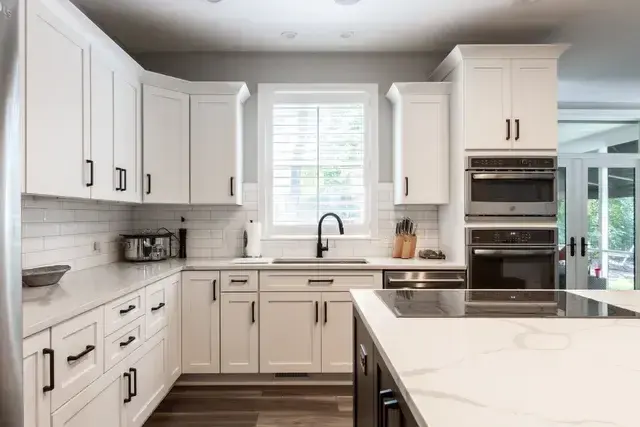
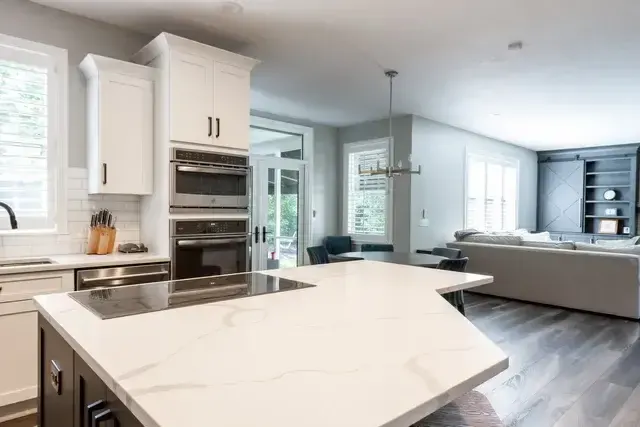
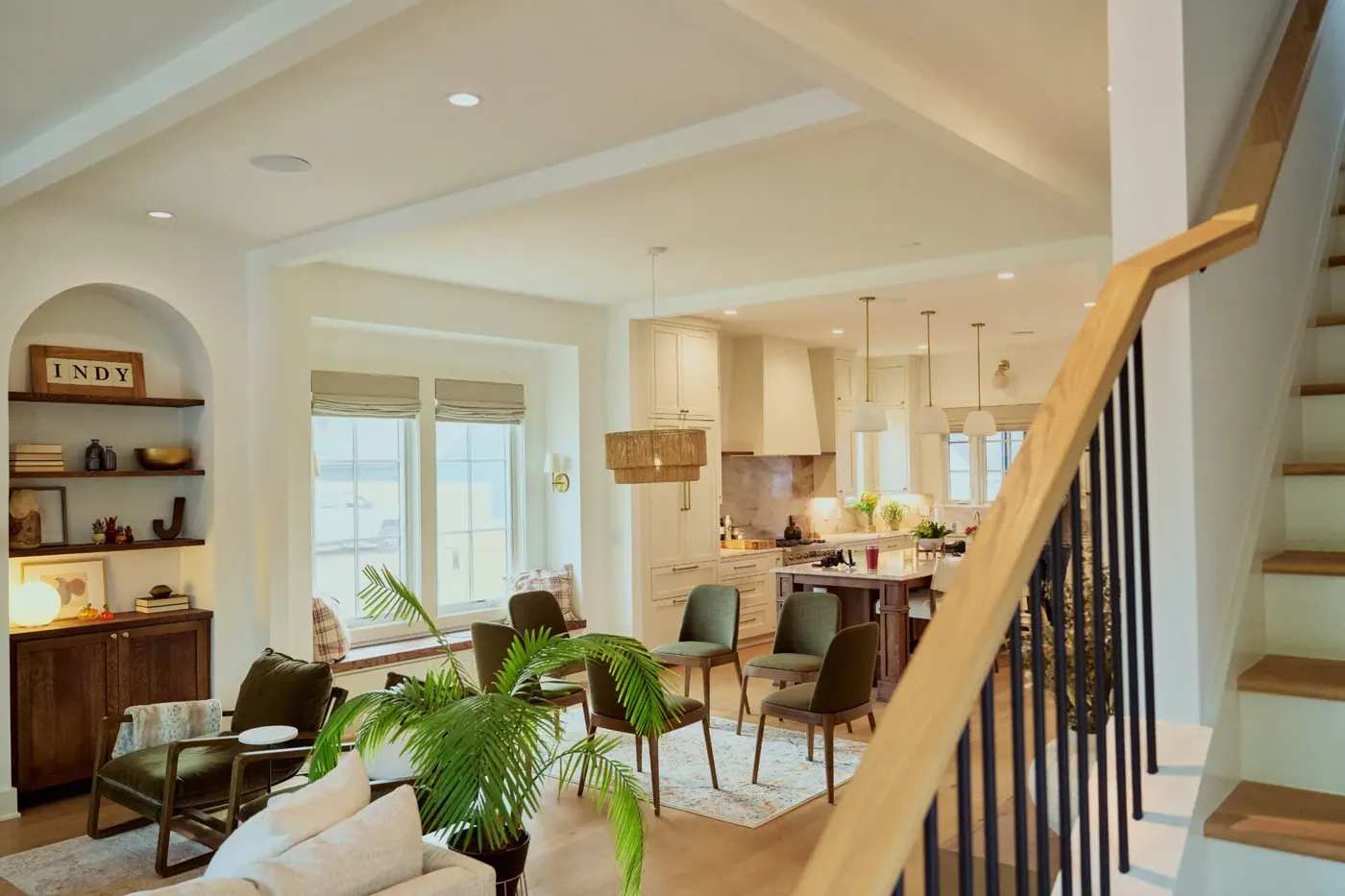
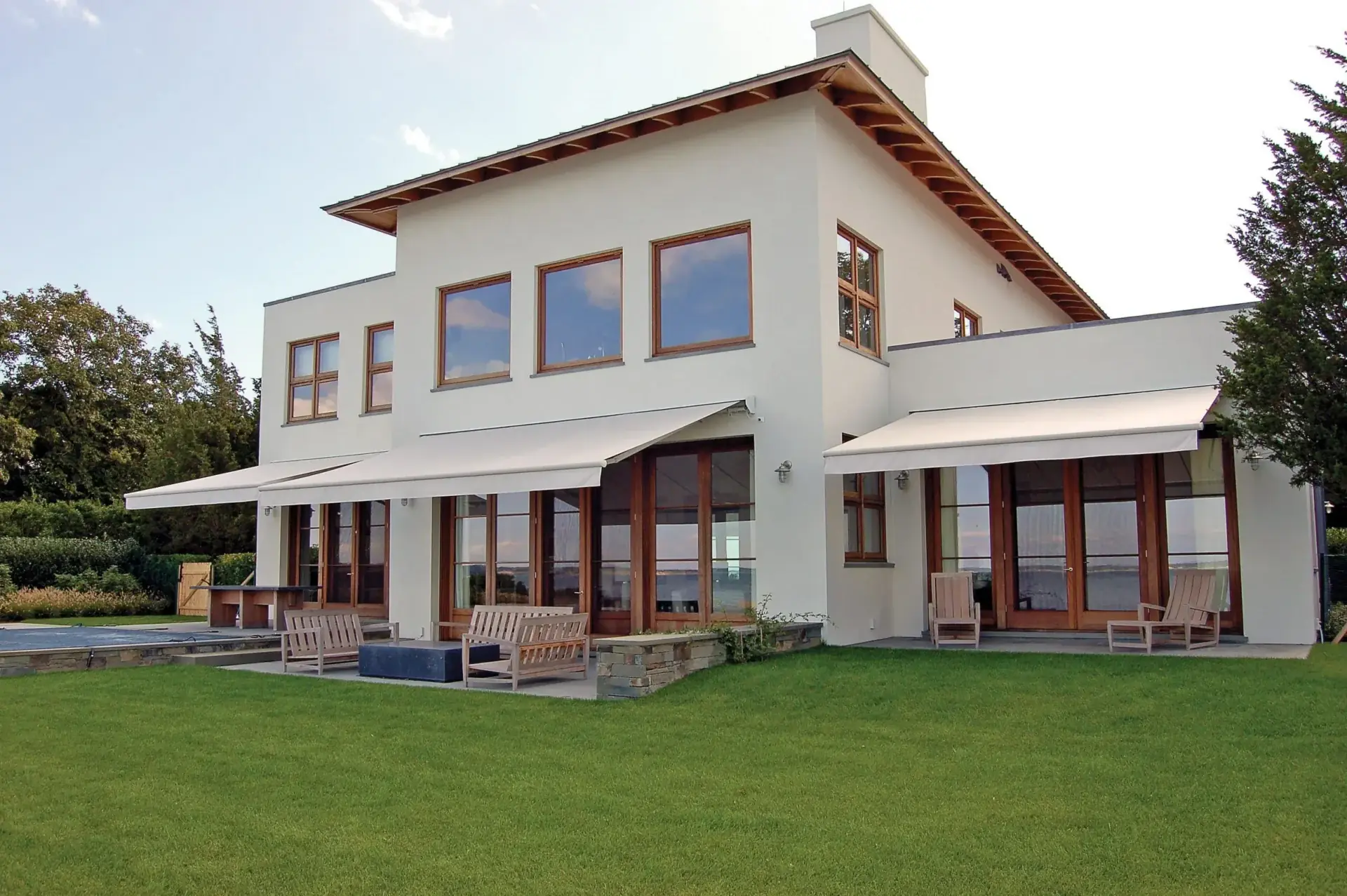
Custom shades measured and installed in SheridanPlantation shutters fitted to a Sheridan windowCellular shades in a Sheridan living room
Scope of Work

What Faux Wood Blinds Includes

Every Sheridan job is documented item by item. Here is what the crew covers.

Every opening measured three widths and three heights, then checked corner to corner for square

Room moisture read before the material call, so baths, kitchens, laundry rooms and finished basements get faux wood

Mounting depth taken at the top of the opening so a 2 inch headrail clears the trim and any hardware

Solid PVC and wood-polymer composite separated on the order, because they don't weigh the same or behave the same

West and south openings flagged, since surface heat on a dark slat is what starts a bow

Slat size set per opening, 2 inch as the standard and 2 1/2 inch where the window is wide enough to carry it

Center support bracket planned on any span wide enough to let a loaded headrail settle in the middle

Wide openings split two-on-one so no single blind carries more weight than its brackets should

Finished weight checked against the opening before a wide unit gets ordered as one piece

Routeless slats specified where a row of lit route holes would be noticed from inside the room

Cloth tape ladders offered where the route holes should disappear behind a band of fabric

Tilt wand set as the default, with cord tilt only where a wand can't clear a handle or a return

Cordless lift specified in rooms that kids and pets actually use

Products specified to conform to ANSI/WCMA A100.1-2022 for cord access

Valance style and return depth chosen so an outside mount really closes off the sides

Factory deduction left with the manufacturer so the allowance never gets taken twice

Light gap per side written onto the paperwork before the order goes to the factory

Old blinds pulled, brackets removed, and every new unit tilted and lifted end to end before we leave

Pricing

What Faux Wood Blinds Cost in Sheridan

National category figures put stock blinds and shades near $60 to $600 a window, with custom-fabricated units running roughly $250 to $2,600. Those are published national ranges for the category, not a quote for any address in Sheridan. Faux wood lands low in that band, which is most of why people choose it. A 2 inch composite blind on an ordinary bathroom opening is inexpensive work. Price climbs when the opening gets wide, because weight is the real constraint here: a wide span wants a center support bracket or a two-on-one headrail, and both add parts and install time. Routeless slats, cloth tapes and a cordless lift each move the number as well. Sheridan Window Treatments prices from measured openings around Hamilton County, never from a per-window average.

By Product

How Faux Wood Blinds Differ by Product

Every product in this trade behaves differently in a room. Here is what that means for this work.

2 inch faux wood slat: The size most houses around here want, and the one we start from. It gives you a real view between open slats without the stack a wider slat builds at the top, and it stays flat across an ordinary bath or bedroom opening.

2 1/2 inch faux wood slat: Fewer slats over the same height, so the face reads cleaner and the open view improves. It also weighs more per running foot, which is exactly why we settle the span and the bracket plan before writing it onto a wide window.

Solid PVC slats: The least expensive construction we hang and the most waterproof. It's also the heaviest, and it's the one most willing to take a bow on hot glass, so we keep it to smaller openings and off the west wall in July.

Wood-polymer composite slats: Wood flour blended with polymer, stiffer and lighter than solid PVC at the same slat size. It costs a bit more and it holds a straight line better on a wide opening or a sunny one, so it's what we specify by default.

Routeless slats: The lift cord runs through a notch at the back edge instead of a hole punched through the face. With the blind closed there's no row of pinholes glowing at you across a dark bedroom. It costs more and it earns it there.

Cloth tape ladders: A woven tape that hides the route holes and lays a color band down the face of the blind. It changes the look more than anything else on the order, and it narrows the view slightly wherever a tape crosses a slat.

Cordless lift: A constant-force spring inside the headrail in place of a lift cord. It's what goes into rooms children use. On a heavy faux wood unit it wants a hand near each end of the bottom rail rather than one hand in the middle.

Tilt wand: A clear or color-matched wand that turns the tilt mechanism. Nothing hangs loose off the headrail, it clears a door handle better than a cord loop does, and it's the default we begin from on almost every faux wood job.

Center support bracket: An extra bracket carried under the middle of a long headrail. On a wide faux wood blind that bracket isn't decoration, it's what keeps the rail from taking a set and the slats from dragging harder on one side than the other.

Two-on-one headrail: Two blinds sharing a single continuous headrail across a wide opening, each with its own lift and tilt. It keeps each unit at a weight the brackets and your arm can manage, and the split position gets written on the order so nobody guesses.

Common Questions

Faux Wood Blinds FAQ

Questions we hear most often from Sheridan homeowners considering faux wood blinds.

Often it won't, and we check that first. The county records nine built parcels in Pearson with years from 1952 to 1981, and that stock has the shallowest jambs in Sheridan: narrow wood returns on the 1950s houses and, on the 1970s work, aluminum slider frames whose integral track takes away most of what's left. A 2 inch headrail needs real usable depth behind the front edge of the opening. So we measure depth at the stop on every window rather than once per house. Where the depth isn't there, we mount outside on the casing and you gain side coverage as a side effect.
Yes, and it's the one room where the argument isn't close. Steam and hot water vapor are what cup a hardwood slat, and PVC simply doesn't move with them. The complication in old Sheridan is the opening, not the material: 621 built parcels inside the town limit carry no subdivision name at all, with years running 1830 to 2025, and the counter usually runs right up under a low window. We specify a cordless lift so nothing hangs onto the work surface, and we set the bottom rail height off the countertop instead of off the sill.
Two inch is the honest default for both, for opposite reasons. On the pre-1940 third of town, where a frame house runs 14 to 22 openings and hardly any of them repeat, the windows are tall and narrow, so a 2 1/2 inch slat reads heavy and stacks taller when you raise it. In Maple Run, where floor areas run 1,186 to 3,981 square feet, the units are wider and a bigger slat closes with fewer gaps. We bring both to the measure. Holding a sample against your own trim in your own light settles it faster than any conversation.
We can get close, and we'll tell you where close ends. D.R. Horton delivered 41 houses in Center Place between 2023 and 2025 and the interior trim is a factory sprayed white, while faux wood slats are extruded in their own whites. Held side by side in north light the two often read as one; in a west room at four in the afternoon they sometimes don't. We record the exact slat batch on your order, because if you finish a basement in two years and add three more windows, a later production run of the same color can land a shade off.
There's no published Sheridan price for window treatments, and we won't invent one. What we can give you is the national picture: stock shades and blinds off a shelf run roughly $60 to $600 per window, and custom made product runs about $250 to $2,600 per window depending on size, lift and material. Faux wood sits low in the custom band. Lead time on custom fabrication is normally two to five weeks. Anything over $150 gets a written contract with scope, dates and total price, which the Indiana Home Improvement Contract Act (IC 24-5-11) requires.
They can be, with the right lift. ANSI/WCMA A100.1-2022 is the product safety standard that governs here, with a compliance date of 1 June 2024, and it applies to the product rather than to any company, so nobody in this trade holds a certification to it. A separate federal custom operating cord rule was vacated by the courts in September 2023, so no installer can honestly claim compliance with it either. What we do instead is specify cordless lift as the default on any window a child can reach, and we point out that inner cords on older blinds are a real hazard, not a formality.
Material, weight and where it belongs. Faux wood is either solid PVC or a wood-polymer composite, and neither one takes on moisture the way a wood slat does. That's the entire reason it exists. The tradeoff is weight. A faux wood slat is heavier per foot than basswood, so the same width that a wood blind handles on its own may need a center support bracket or a two-on-one headrail in faux wood. Across a room you'd struggle to tell a painted faux wood blind from a painted wood one.
No, and that's the specific job we buy them for. A composite or PVC slat has no wood fiber left to swell, so a bathroom running two showers a day doesn't move it, and steam off a stove doesn't either. That's why we put faux wood over sinks, in laundry rooms, in mudrooms and in finished basements in Sheridan without hesitating. What can still happen is heat-driven bowing on a hot sunny window, which is a different failure with a different fix.
Solid PVC can, and you should hear that before you order. A slat sitting behind glass on a west or south elevation gets hot, and a heavy PVC slat that's warm along its whole length will slowly take a slight curve. Composite construction resists it much better because the polymer is stiffened with wood flour. So on a hot exposure we specify composite rather than solid PVC, we keep dark colors off the worst windows, and we suggest tilting the slats open on the hottest afternoons instead of closing them tight.
It depends on the maker, but the honest answer is that width isn't the limit, weight is. Every manufacturer publishes a maximum width and a maximum square footage, and faux wood hits the weight ceiling before wood does. Past a certain span a single headrail starts to settle in the middle, the slats stop lining up, and lifting the blind stops feeling good. Our usual move on a wide opening is either a center support bracket or two blinds on one continuous headrail, decided at the measure rather than after.
Solid PVC is exactly what it sounds like: extruded vinyl, cheapest, fully waterproof, heaviest and the most likely to bow under heat. Composite mixes wood flour into a polymer, which stiffens the slat and drops the weight, and it usually carries a better finish. Composite costs somewhat more. On small bath windows out of direct sun, PVC is honest value. On anything wide, tall or sunny, composite is the one that still looks right in five years, so that's where we spend the difference.
They do, and people notice it at night more than during the day. A standard slat has a hole punched through it for the lift cord, and with the blind closed those holes stack into a vertical line of small bright dots. In a living room nobody cares. In a bedroom facing a streetlight it becomes the thing you look at. Routeless construction moves the cord into a notch at the back edge, and cloth tapes hide the holes behind fabric. Either one solves it.
It isn't, and it's the disclosure worth having in writing. An inside mounted blind has to be narrower than the opening or it would bind against the trim, so the factory takes a small deduction and light comes in down each side. Lutron publishes 3/4 inch per side on their roller product as a real figure, and horizontal blinds behave similarly. If a bedroom in Sheridan needs to be dark, an outside mount that overlaps the trim beats an inside mount every time.
They're heavy, which makes the lift choice matter more than it does on a light shade. We specify cordless in any room a child uses, meaning there's no lift cord anywhere on the product, which is the direction the ANSI/WCMA A100.1-2022 work on cord access points. Inner-cord non-compliance is treated as a substantial product hazard under 16 CFR 1120.3. If a window is wide enough that a cordless faux wood unit gets awkward to lift, that's an argument for splitting it, not for putting a cord back.
That's one of the better places for it. A basement in Hamilton County sits cooler and damper than the rest of the house through the muggy stretch from late May into September, and that's the combination that moves a wood slat. Faux wood ignores it. The one thing we check is mounting depth, since basement openings are often shallow and a 2 inch headrail needs somewhere to sit. Where depth runs out we go to an outside mount or drop to a narrower slat.
More forgivingly than almost anything else we sell. Close the slats one way, run a duster or a vacuum brush across the face, then close them the other way and repeat. Marks come off with a damp cloth and mild soap, and unlike wood there's nothing to worry about with water. Don't soak the headrail, because the lift mechanism and the tilt gears inside it don't want to be wet. Cloth tapes need a gentler touch than the slats do.
Probably close, and possibly not exact. Faux wood slats are made in production runs, and white isn't one white. A blind ordered next spring can land a shade off from one hanging now, which nobody notices across a hallway and everybody notices on two windows in the same wall. The fix is simple if you plan for it: order every opening in a room at once, even the ones you're tempted to skip. We write the exact color name onto your paperwork so a future order starts from the right place.
Look at how wide the opening is and how much view you want when the blind is open. The 2 inch slat is our standard and it suits most openings in a Sheridan house. The 2 1/2 inch slat puts fewer slats across the same height, so the face looks calmer and you see more out. It also adds weight, which pushes a wide window toward a support bracket. On a short window a wide slat can look heavy, so we scale it to the opening.
Custom fabrication generally runs two to five weeks, and faux wood usually sits at the shorter end of that because it's a high-volume product. Nothing about that window is a delay, it's a factory cutting slats to your measured sizes. You'll have the fabrication window in writing along with scope, dates and total price, which the Indiana Home Improvement Contract Act requires on residential work over $150. If a date shifts at the factory, you hear it from us the week we learn it.
They do something about both, and we won't overstate either. Closed slats put a solid layer between the room and the glass, and tilting them upward bounces afternoon sun toward the ceiling rather than onto the floor. That's real comfort, though it isn't insulation, and the documented energy testing in this trade sits with cellular shades rather than with blinds. On fading, NFRC puts UV at roughly 40 to 60 percent of the damage, so closing the slats slows fading on floors and furniture. It doesn't stop it.
Free In-Home Measure

Schedule Your Free In-Home Measure in Sheridan

Contact Information

Reach Us Directly

Our team prioritizes scheduled measures and service calls, and books in-home measures during business hours.

Office
1417 Commerce Avenue, Indianapolis, IN 46201
Hours
Mon-Fri 8a-6p
Service Area
Sheridan, IN and Surrounding Areas

Ready to Book Your Measure?

Call us to set up an in-home measure, or to ask about a treatment that has stopped working. We will talk it through on the phone first.

Service area

Serving Sheridan and the surrounding area

Call NowGet Quote