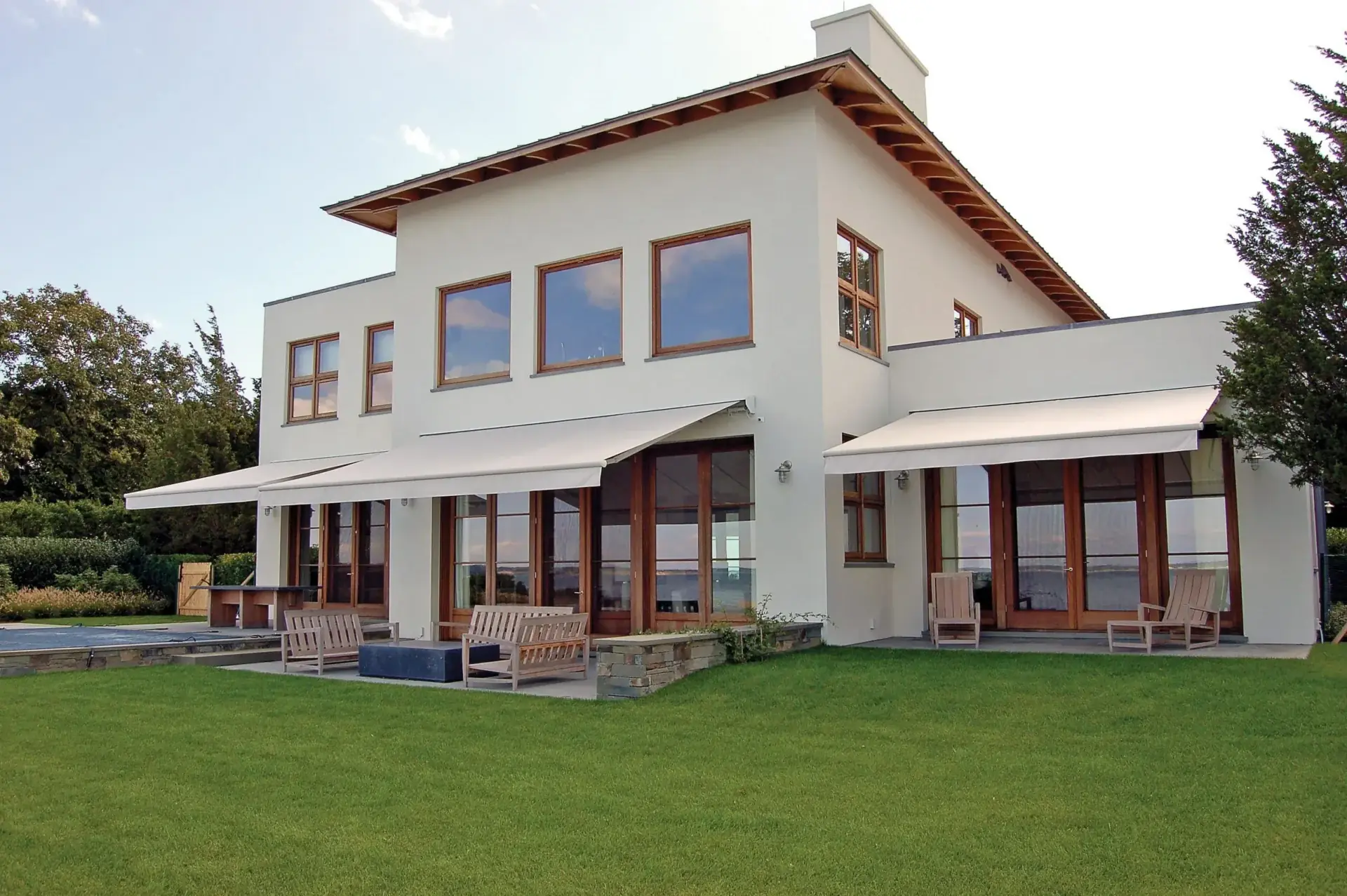
Valances & Top Treatments in Sheridan
Decoration sold as decoration, never as light control
These questions cover how this product actually behaves in a house rather than in a photograph. Light, privacy, operation and durability all look different once something has been hanging through a full year.
- Service: Valances & Top Treatments for Sheridan homeowners
- Service area: Sheridan, IN and surrounding areas Two different timelines apply. New custom product takes weeks because it has to be made. Repairs to what's already hanging, a cord lock, a ladder string, a chain that jumped the clutch, are usually far quicker.
- Insured and bonded
- Serving Sheridan, IN since 2008
Expert Valances & Top Treatments for Sheridan Homes
Sheridan almost skipped the era that made top treatments a standard part of a house. Only 8.0 percent of the stock, 116 units, dates from 1980 to 1999, which is the smallest share of that period anywhere in this project, so the town has very little of the arched and elliptical transom vocabulary that fills towns built out in the nineties. What that leaves is two populations with different needs. On the pre-1940 stock a valance or a fabric cornice covers a hardware line and softens a tall narrow opening. On the post-2000 stock, where openings are plain rectangles in drywall returns with no casing at all, a top treatment is the only trim the window will ever have.
Here's the part that should be said out loud: a valance is decoration. It doesn't darken a room, it doesn't help in January, and it doesn't add privacy. What it genuinely does is hide a headrail, cover the light that escapes over the top of a roller tube, and give a plain opening a finished edge. It also costs real money in fabric and labor, and it commits you to a dye lot, so a valance added over a fourth window two years later may not match the three you have. If the budget is tight, put it into the shade and skip the top treatment.
Signs You Need Valances & Top Treatments
If you notice any of these in your Sheridan home, it is worth booking a measure. None of it is urgent, and none of it fixes itself either.
You want color up high without floor length panels
Brackets and cords show above the shade
A powder room window sits completely bare
A dining room wants formality without panels
Light washes over the headrail after dark
Windows look short against a high ceiling
Hard treatments make a room feel like an office
One window in a run doesn't match the others
A print chosen years ago now dates the room
Wood blinds look bare across a whole wall
How Sheridan Window Treatments Handles Valances & Top Treatments
Every job follows the same five-step process. Transparent, thorough, and done right the first time.
Finished width run past the trim
Order placed, profile drawn
Brackets anchored, treatment hung level
Yardage and repeat calculated
Written contract issued, IC 24-5-11
Valances & Top Treatments in Sheridan
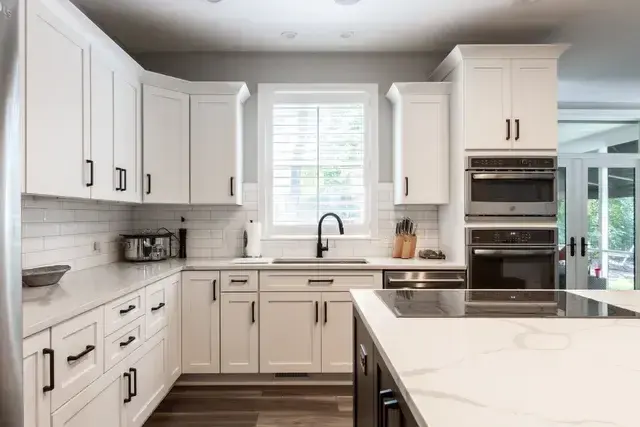
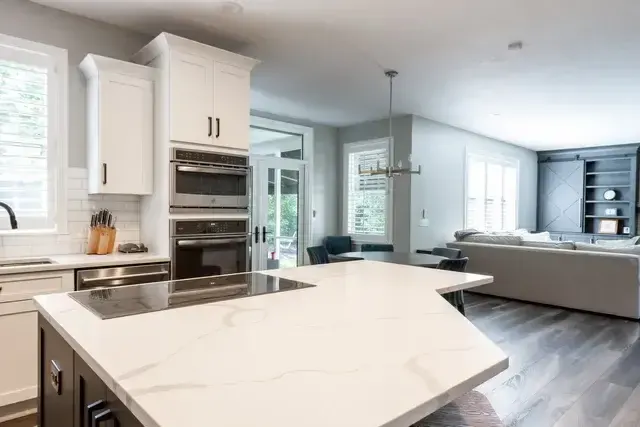
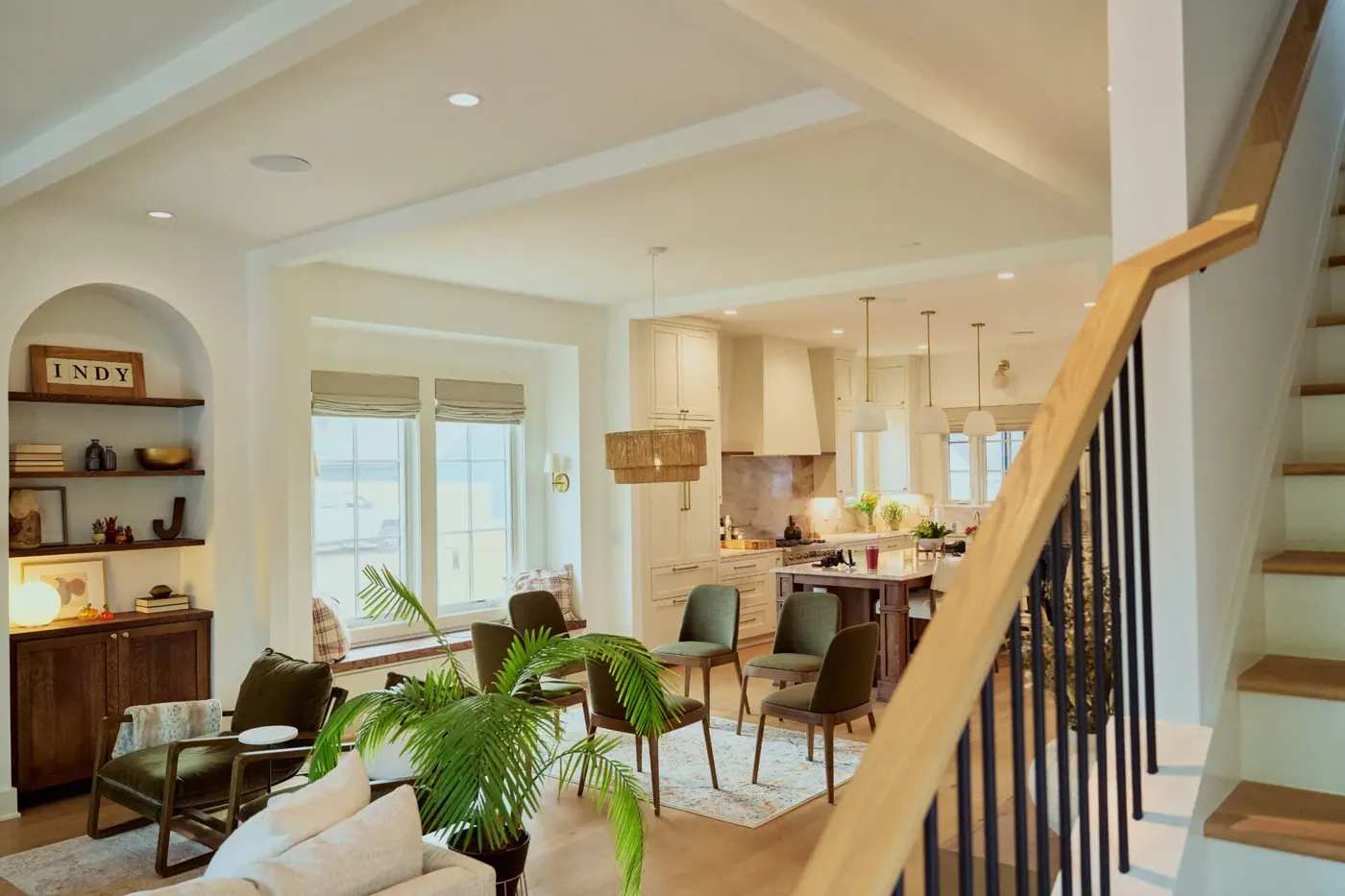
Photographs from real valances & top treatments jobs completed by our crew in Sheridan and surrounding areas.
What Valances & Top Treatments Includes
Every Sheridan job is documented item by item. Here is what the crew covers.
Whatever is already at the window documented first, since a top treatment nearly always goes over an existing shade or rod
Headrail depth, bracket projection and any hanging chain measured so the treatment clears what sits behind it
Mounting height set above the opening wherever the window needs to read taller than it is
Finished width run past the trim on both sides so the treatment frames the window instead of sitting on it
Depth proportioned against the full window height rather than taken from a catalog default
Return depth dimensioned to clear the hardware behind it plus a working gap for hands
Style chosen room by room: box pleat, gathered, swag with cascades, shaped hem or an upholstered cornice
Cornice profile drawn full size and checked against the wall before any frame gets cut
Fabric run direction and pattern placement decided so the motif centers on the window rather than wherever it lands
Pattern repeat matched across a bay or a run of windows so every treatment starts at the same point in the design
Welt, banding or applied trim chosen with a physical sample laid against the face fabric in the room
Buckram or interlining added where the fabric needs to hold a crisp edge instead of collapsing
Lining specified so every window presents the same face to the street
Mounting board width, depth and angle brackets sized to the weight and the return
Fasteners landed in framing or in rated anchors, because a cornice hangs off the wall on a lever arm
Access left open for battery wands, motor heads and lift cords living behind the treatment
Level checked across the whole run, since a top treatment sits at eye height and shows a slope instantly
Swags and folds dressed by hand on site, because nothing ships already arranged
What Valances and Top Treatments Cost in Sheridan
The closest published national figure is the custom drapery range of roughly $300 to $4,000 per window. Top treatments generally sit at the lower end of that, since there's far less cloth in a valance than in a pair of floor-length panels. Read it as a national category range and not a quote for a room in Sheridan. What moves the number is construction more than size. A rod-pocket valance in a mid-priced fabric is a modest line item. An upholstered cornice is a built object: a frame gets cut to a drawn profile, padded, wrapped and trimmed by hand. Add a large pattern repeat across four windows in Hamilton County and the yardage climbs before anyone starts stapling.
How Valances & Top Treatments Differ by Product
Every product in this trade behaves differently in a room. Here is what that means for this work.
Upholstered cornice: A wood frame cut to a drawn profile, padded and wrapped in fabric, then hung above the window. It reads architectural rather than soft, it hides a headrail completely, and it holds a straight top line that no fabric valance can match.
Box pleat valance: Flat panels separated by crisp inverted pleats at regular intervals. It's tailored without being stiff, it suits a stripe or a solid better than a busy print, and the pleat spacing gets set to the window width instead of a default.
Gathered valance: Fabric shirred onto a board or a rod at two or two and a half times fullness. It's the softest of the board-mounted options and the most forgiving of a lightweight fabric, and it belongs in rooms that already lean traditional.
Swag with cascades: A draped center section with tails falling at each side. It carries real formality and it needs ceiling height to look right. The cut is done on the bias so the folds fall properly, which is why a swag is not a beginner project.
Shaped hem valance: A board-mounted valance whose lower edge is cut to a curve, an arch or a scallop instead of running straight. The shape gets drawn to the actual window width so the low points land where you want them, not wherever the pattern piece says.
Flat tailored valance: A single unpleated panel on a board, often with banding at the hem or the sides. It's the quietest top treatment there is, and it's what we specify in a room that wants the headrail hidden without adding any period flavor.
Rod-pocket valance: The simplest version, gathered onto a decorative rod above the window. It costs least, it comes down for cleaning easily, and it works where the treatment is decorative and nothing structural has to be hidden behind it.
Welt, banding and applied trim: A contrast cord at the edge, a flat band inset from the hem, or a fringe along the bottom. This is where a plain treatment gets its personality, and it's also where a second color from the room gets pulled up to the window.
Buckram and interlining: Stiffener and a soft flannel layer built into the treatment so pleats stand up and edges stay sharp. Skip them and a valance sags in the middle within a season, which is the usual reason a ready-made one looks wrong.
Mounting board and angle brackets: The board the treatment staples to and the metal brackets that carry it. Board depth has to clear the shade hardware behind, and bracket spacing has to suit the weight, especially on a cornice with a deep return.
Valances & Top Treatments FAQ
Questions we hear most often from Sheridan homeowners considering valances & top treatments.
Valances & Top Treatments Across Sheridan
We measure and install in every one of these Sheridan neighborhoods. Each has its own page with the build eras, window conditions and mounting notes for that section.
- Valances & Top Treatments in Original Town and the Higbee Plats
- Valances & Top Treatments in Sheridan Downtown Commercial Historic District
- Valances & Top Treatments in Maple Run
- Valances & Top Treatments in Gardens at Maple Run
- Valances & Top Treatments in Sheridan Estates
- Valances & Top Treatments in Centre Place
- Valances & Top Treatments in Thistlethwaite Additions
- Valances & Top Treatments in Pearson and White & Morris Additions
- Valances & Top Treatments in Atwater
Other Window Treatment Services in Sheridan
Sheridan Window Treatments handles the full scope of window treatment work. Explore our other services below.
Schedule Your Free In-Home Measure in Sheridan
Reach Us Directly
Our team prioritizes scheduled measures and service calls, and books in-home measures during business hours.
Ready to Book Your Measure?
Call us to set up an in-home measure, or to ask about a treatment that has stopped working. We will talk it through on the phone first.