A Sheridan Homeowner's Guide to Custom Drapery for 2008
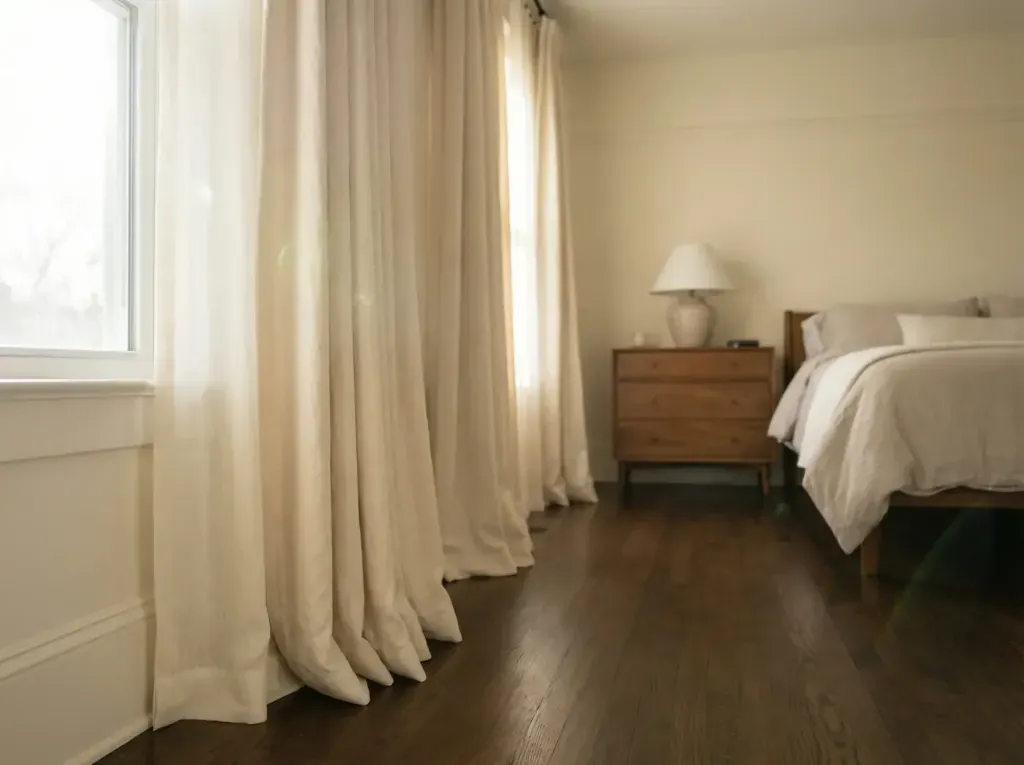
Most houses we walk into already have shades on the windows, so the drapery question is really a layering question: how much fullness the room needs, and whether the panels should draw at all or just sit there and look good. Get that backward in a Sheridan home and you end up buying more fabric and more hardware than the room actually needed. Here is how to get it right.
Pleat Styles and Fullness
Nothing about custom drapery gets fixed after the fact, which is why pleat style gets decided first. Pinch pleat is the one most people picture. A buckram header stiffens the top, and the pleats get tacked by hand, hanging on rings or a traverse track that holds its tailored shape for decades. A two finger pleat softens that same idea with less fabric bunched into each pleat, reading more casual on the wall. Goblet pleat holds a formal, rounded shape, usually with stuffing inside, and belongs on panels that never get drawn, since pulling it open and shut wears the shape out fast. Ripplefold does away with pleats altogether, riding a dedicated track with evenly spaced carriers, and it is the system we reach for on a very wide run or anything getting motorized.
Fullness is flat fabric width divided by the width the hung panel covers. A panel at 2 times fullness covering 50 inches of rod uses close to 100 inches of fabric once you account for hems and returns. Most pleated panels get built at 2 to 2.5 times fullness, and a panel built under that looks thin and pinched no matter what the fabric cost. Ripplefold is spelled out as a percentage, usually 80 or 100 percent.
What Custom Drapery Costs
Yardage, not fabric alone, drives most of a drapery quote. The formula: width covered times fullness, plus returns, overlaps and hems, divided by usable fabric width, gives the number of cuts, and that times finished length gives total yardage. A pattern repeat adds further cost, since every cut must align the pattern, and a large repeat on a tall window increases waste significantly.
Nationally, custom drapery measured and installed runs roughly $250 to $2,600 a window, typically toward the higher end given yardage and labor demands. Hand tacked pleats, interlining and mitered hems all add sewing time, which is also why well built panels still hang correctly after years of use. Hardware is commonly quoted separately, so confirm inclusion before comparing a Sheridan quote to another. Costs that surface later include dye lot mismatches on panels added after the original order and cleaning limited to dry cleaning or an in place service. When comparing quotes, request the same information from each company: fullness ratio, pleat style, lining type, hardware inclusion, and lead time.
Lining Choices and Fabric Behavior
Skip the lining and the panel fades faster than any other option, since nothing stands between the face fabric and the sun. Add standard lining, a sateen backing, and the panel gains body while the street side of a Sheridan house looks uniform. The fading slows down noticeably too, even if it never fully stops.
Blackout lining is coated to block light through the cloth, though light still creeps around the panel without generous overlap and real returns. Interlining, a soft flannel layer between face fabric and lining, costs the most and looks it. It adds real weight and a deeper fold, plus a bit of hush to an echoing room. Linen moves with the weather, so a hem that kissed the floor in June might drag by November. Velvet needs hardware strong enough to carry its own weight, and sheers need more fullness than anything else on the list.
Choosing Drapery Room by Room
A window covering handles light. Drapery handles the room, softening hard surfaces and giving a window somewhere to belong instead of reading as a hole cut in the wall.
- In a living room, mount high and wide, and keep the panels stationary if a shade underneath already handles the light.
- In a dining room, lean formal with pinch or goblet pleats and interlining, since the room gets used mostly after dark and closed panels are the point rather than an inconvenience.
- In a primary bedroom, a blackout lined panel over a room darkening shade, with real overlap and proper returns, is what actually gets the room dark, not either piece alone.
- In a kids room, keep it simple with stationary panels beside a cordless shade, since cordless product built to ANSI/WCMA A100.1-2022 keeps loose cords out of a room where kids play.
- In a home office, stationary panels next to a solar shade cut glare and calm the echo in a room full of hard surfaces and video calls.
Kitchens and bathrooms mostly skip full length drapery, since grease and steam call for something wipeable instead. Across Sheridan, the rooms that feel finished tend to be the ones where the rod went up high and wide first, and the fabric choice came after.
Hang the rod high and run it wide, then let a shade do the actual light control while the fabric handles the softening. That approach alone fixes most drapery problems in Sheridan houses. Sheridan Window Treatments will tell you when stationary panels are the smarter buy instead of selling you functioning drapery you do not need. Call (317) 999-5154 to walk your rooms, anywhere in Hamilton County, IN.
Hardware, Stack Back and Floor Break
Stack back is the wall space the panels take up fully open, and it grows with fullness, fabric thickness, lining and pleat style, which is why so many panels end up covering a third of the glass all day. The fix: mount the rod wider than the opening so open panels land on wall, and higher than the trim so the window reads taller. Where there is not enough wall on both sides, a one way draw stacking to the open side solves it.
The return wraps the panel back to the wall at the rod's end, and skipping it leaves a light line down the outside edge. The overlap is where two panels cross in the middle so they close without a gap. Lined drapery is heavy, so brackets need to land in framing or rated anchors, and a long rod needs a center support. Float, about half an inch up, suits daily use or a house with pets. Kiss just brushes the floor, beautiful when level and unforgiving when not. Break, an inch or two of extra length, forgives an uneven floor. Puddle, three inches or more, is for stationary panels only. Measure the floor in several spots, since older Sheridan houses are rarely level across a whole window.
Frequently Asked Questions
Why does a patterned fabric cost so much more?
Because of the repeat. Every panel has to be cut so the pattern lands in the same place, which turns the fabric between usable cuts into waste. The bigger the repeat, the more yardage you're paying for without ever hanging it on the window. On a tall window, a large repeat can add a noticeable amount of fabric to the order. Ask what the repeat measures before you fall for a fabric, and ask whether it can be railroaded, meaning turned sideways to avoid seams on a wide treatment.
How do I clean custom drapery?
Vacuum with a brush attachment on low suction a few times a year and most panels stay in good shape for a long time. When they need more than that, use dry cleaning or an in place cleaning service. Never put a lined panel through a home washing machine, since the face fabric and the lining shrink at different rates and the panel will never hang correctly again afterward. If a panel gets rumpled, a steamer used from the back usually settles the folds.
Should drapery panels actually draw, or is it fine to leave them stationary?
Depends on what the shade underneath is doing. If a shade or blind already handles the light and the privacy, stationary panels are usually the smarter buy, since they use less fullness and less hardware while giving you the same finished look on the wall. Functioning drapery makes more sense in a room with no shade at all, or in a primary bedroom, where the extra layer of fabric closing over a shade is what actually gets the room dark. Ask whether anyone will actually pull the panels shut on a normal night before paying for hardware that lets them do it.
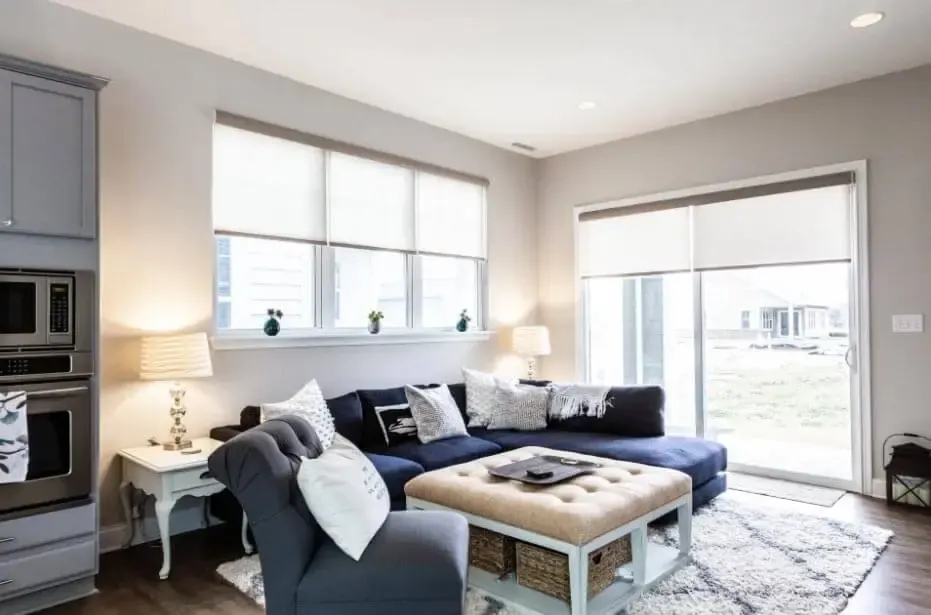 Do You Need Blackout, or Will Room Darkening Get the Job Done
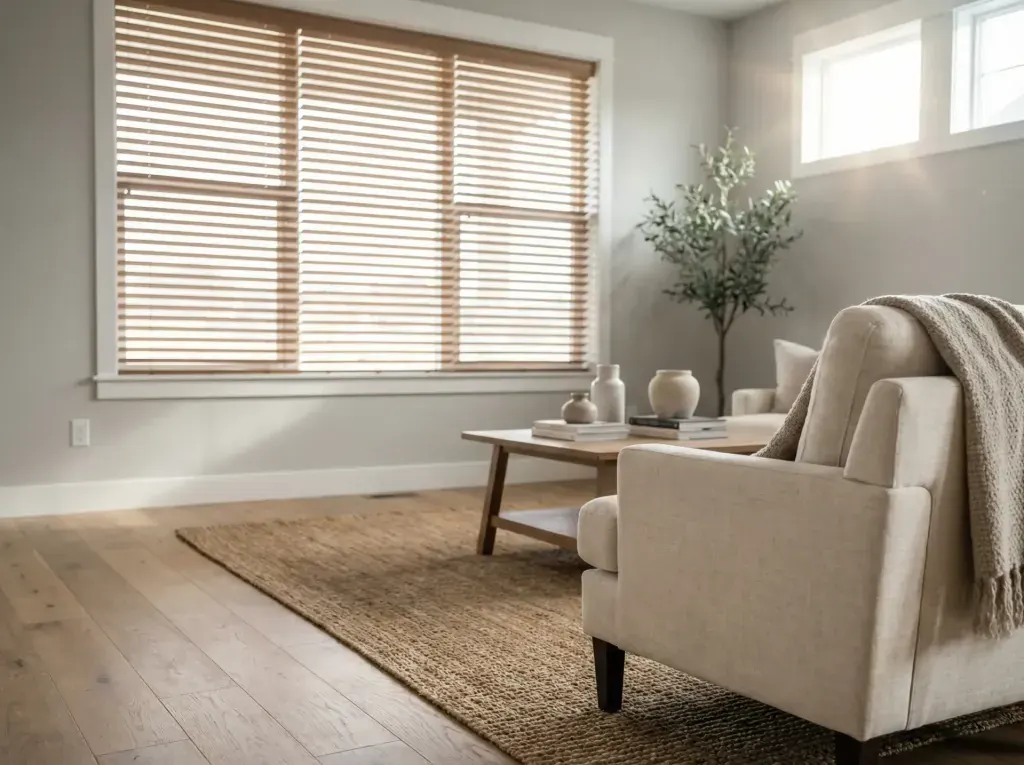 Inside Mount vs Outside Mount: Choosing the Right Fit for Your Sheridan Windows
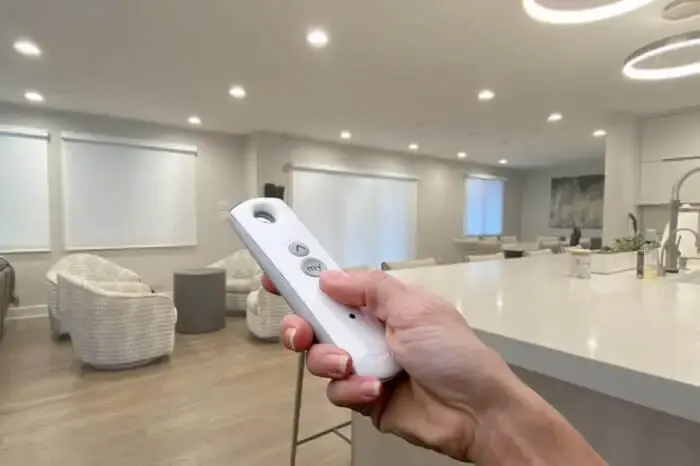 Battery or Hardwired: Powering Smart Shades in Sheridan