Custom or Stock Blinds in Sheridan: The Real Cost Math
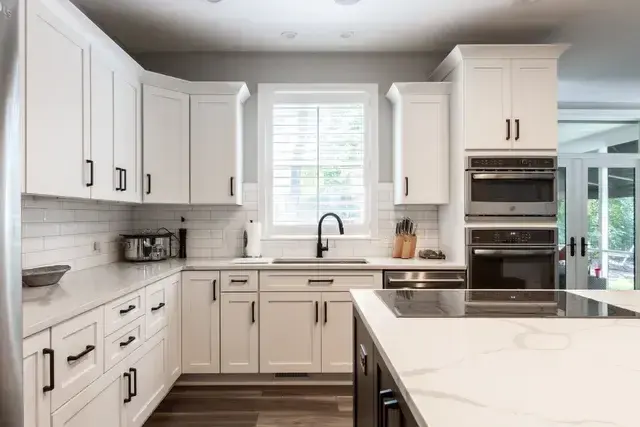
The question comes up on nearly every estimate. Why does a blind from a store cost sixty dollars while a similar looking one from a custom shop costs several hundred? The answer is not really about fabric. It is about what happens mechanically when a boxed product gets cut down to fit an opening it was never built for, and about what a proper measure finds in a Sheridan house that a tape measure at the store never will.
What Happens When a Stock Blind Gets Cut to Fit
Before deciding where stock belongs in a house, it helps to know what happens when a store cuts one down. A stock blind starts life at a fixed width and length. The saw brings it down to size, usually to the nearest eighth of an inch, and that single step is both the convenience and the catch.
A headrail is not an empty bar. Inside sits a tilt mechanism, paired with a lift system and brackets set at specific points, with ladder strings spaced below to keep each slat level. Cut that headrail down and the mechanism shifts relative to the ends, while the ladder strings, spaced for the original width, stay put, leaving slat near each end unsupported.
That unsupported length is what sags, visibly, after a couple years of daily use. It rarely matters in a room where the blind barely moves. It matters quite a bit in a kitchen or a living room where the same blind gets operated every day, which is the distinction that should drive where stock gets used in a house.
Warranty, Remakes and Who Pays If It's Wrong
The financial risk sits in a different place depending on which you buy. A stock blind cut wrong at a store is usually a final sale, so a bad eighth inch measurement becomes a second full purchase. A custom order shifts that risk to the company that measured, since a remake caused by their bad number is their cost.
That shift is arguably the biggest thing the price difference buys, more than the fabric or the finish. Confirm it in plain words before signing: if the numbers come back wrong, who pays for the remake? A vague answer here deserves real scrutiny.
Warranty coverage follows a similar split. A cut down stock blind commonly has the trimmed dimension excluded from the manufacturer's warranty, since the manufacturer did not make the cut. IN law requires a written contract with a scope and a total price for residential jobs over $150, under IC 24-5-11, so put the mount type and lift type per opening in writing. Prices shift over time, and the ranges here reflect national data for 2008, not a quote for a specific Sheridan address.
Split the house by how hard each window actually works. Daily use and a visible spot in the living space point toward custom. A room touched twice a season points toward stock. Just keep the same choice on any two openings visible from the same spot. Sheridan Window Treatments will walk a Sheridan home and say plainly which rooms do not need custom pricing. Call (317) 999-5154 and we will measure either way.
Why Openings Are Rarely Perfectly Square
The second mistake is skipping the diagonal check because the opening looks square to the eye. It rarely is, not after a house has stood for a couple of decades. Framing settles, and the gap between two diagonal measurements is usually where that shows up first, long before it is visible without a tape measure.
Ordering a stock rectangle for an opening that has not been checked this way is a coin flip. Size it generously and it may bind at the narrow point every time it operates. Size it tighter and a wedge of daylight shows along one side once it is hung, wider at one end than the other, with no way to fix it after the cut.
This mistake shows up constantly in older Sheridan homes and in additions, and it is entirely avoidable. A five minute diagonal check before ordering anything, stock or custom, tells you whether you are dealing with a normal opening or one that needs a product built to its actual shape.
Where Stock Makes Sense and Where It Doesn't
A measure is also where it becomes obvious whether a given opening even needs custom pricing. Nationally, stock runs roughly $60 to $600 a window, while custom runs roughly $250 to $2,600 measured and installed, and an honest installer will say plainly when an opening does not need the more expensive option.
Square, standard sized openings in low use spaces, a garage, a basement, a laundry room, a guest room, are usually fine with stock, and a good measure confirms that rather than upselling around it. What changes the recommendation is anything the measure flags as a problem: an opening that is out of square, unusually wide or tall, or deeper than the standard depth a stock product expects.
Bedrooms that need real darkness get flagged the same way, and so do sliders and anything motorized, not from a sales preference but because the measure shows exactly where a fixed size stock product will not do the job. That is the actual value of measuring before buying anything in a Sheridan home: it turns a guess into a decision backed by real numbers.
What a Proper Measure Actually Checks
A full measure takes roughly an hour for a whole house, and it is the step that prevents most of what goes wrong later. Width gets checked at both ends of the opening and at the middle, and for an inside mount, the narrowest of those readings governs, since the product has to pass through the tightest point.
Height gets checked at both ends and at the center, and the shortest reading governs so the bottom rail never lands on a high spot. Both diagonals get measured to quantify how far out of square an opening is, and mounting depth gets checked against the minimum the product needs, since coming up short means an outside mount instead.
A good measure also notes obstructions: a crank that swings outward, an alarm contact, a sill that is not flat. Control side and roll direction get decided on site too. A Sheridan house with a dozen openings usually turns up two or three spots needing a call, easier made in the room than at a cutting counter.
Frequently Asked Questions
If a custom order comes back wrong, who pays?
On a custom job, the company that measured is responsible for the numbers, so a remake caused by a bad measure is on them. Confirm that in plain words before signing, since it is most of what the price difference actually buys. A stock blind cut at a store is generally a final sale, so a mistake there is the buyer's replacement to purchase. Ask about the return policy before the saw runs.
Can any blind be cut down to size?
Most horizontal blinds can be, within limits, and that is the service a cutting counter provides. Roller shades are more restricted, since the tube has to be shortened and the clutch or motor reseated squarely, with the fabric re-hemmed straight. Cut a roller out of square and it telescopes, walking sideways on the tube a little more with each cycle until an edge rubs a bracket. Cellular shades and shutters are not cut to size products at all.
Why does my cut down blind sag at the ends?
Because the ladder strings did not move when the blind got shorter. Those strings hang at intervals set for the original width, and they are what holds each slat level along its length. After a cut, the last ladder can sit well inside the new end, leaving a stretch of slat cantilevered past it. Gravity does the rest over a couple of years. It is not a manufacturing defect. It is what happens when the geometry changes after assembly.
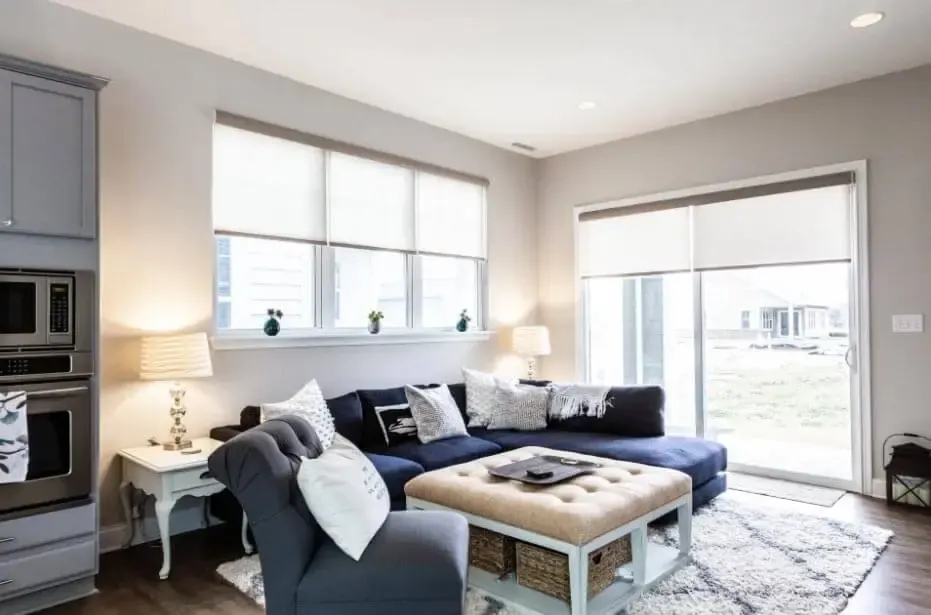 Do You Need Blackout, or Will Room Darkening Get the Job Done
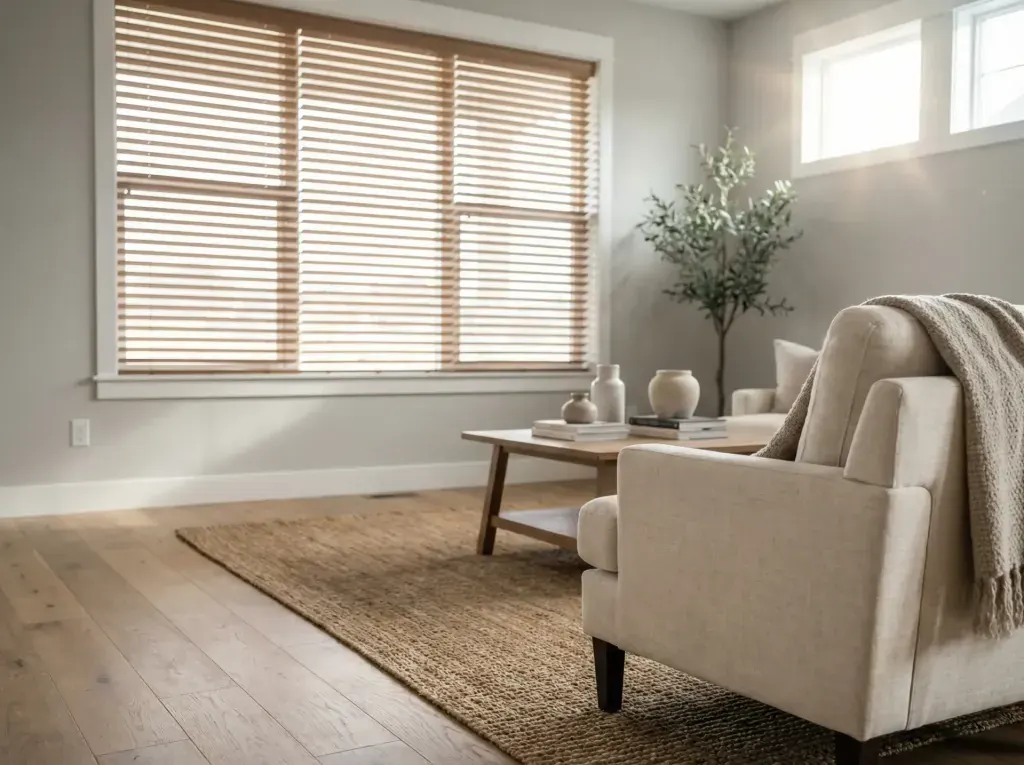 Inside Mount vs Outside Mount: Choosing the Right Fit for Your Sheridan Windows
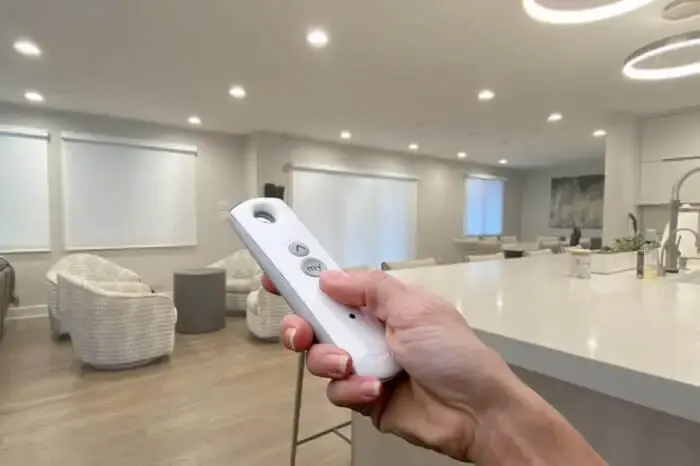 Battery or Hardwired: Powering Smart Shades in Sheridan