Blinds, Shades, Shutters or Drapery: A Sheridan Buyer's Guide
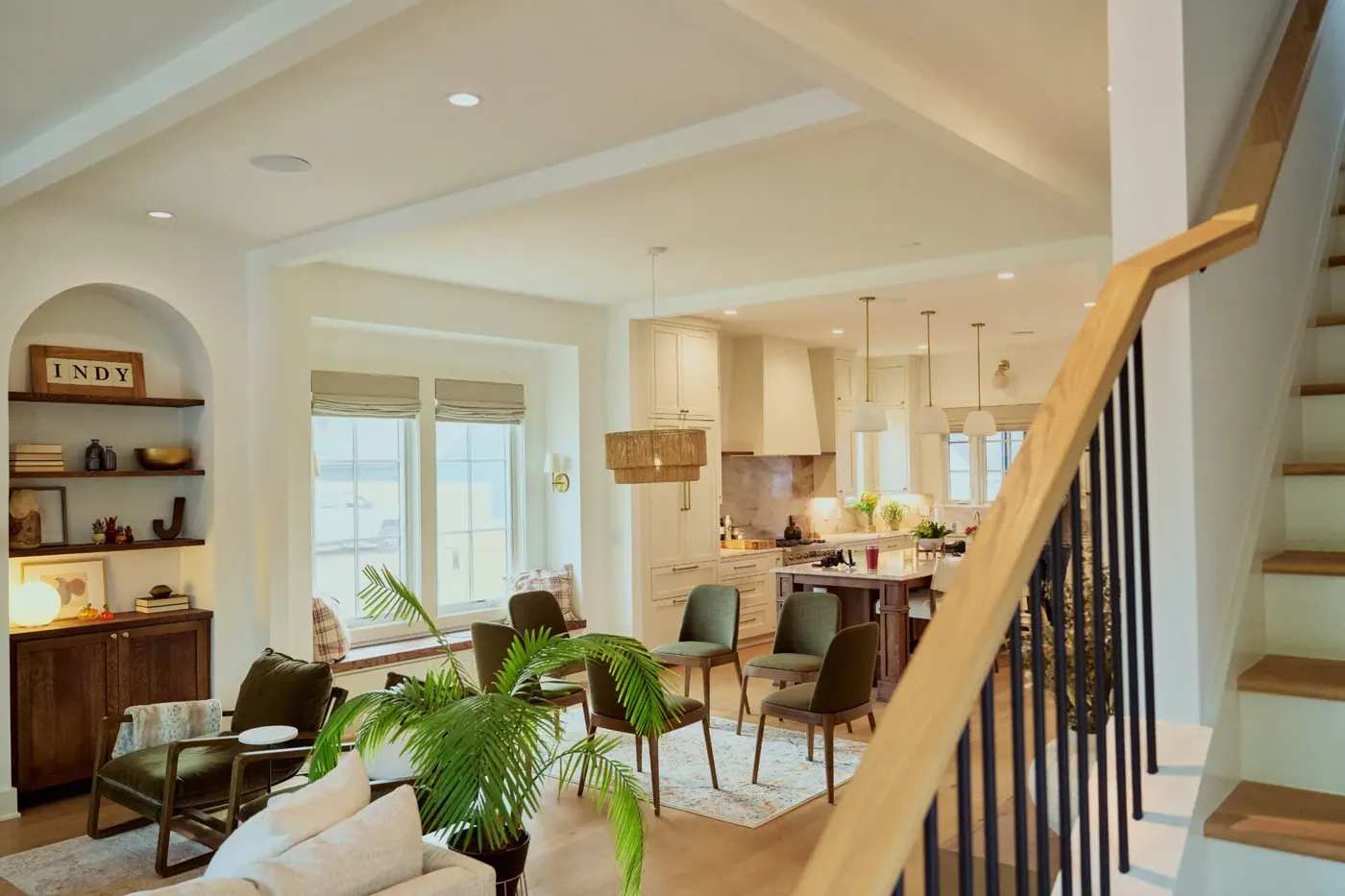
There's a moment in every window treatment project where the choices stop feeling exciting and start feeling like a test: blinds or shades, inside mount or outside, and who's actually going to reach the cord. The good news is that the decisions have an order, and once you follow it, most of them answer themselves. This is the guide we'd walk a Sheridan homeowner through at the kitchen table, in the same order we'd cover it in person, with the parts that usually get skipped left in.
The Four Types of Window Treatments
Price follows family before it follows anything else, and there are four families. Blinds are hard slats or vanes on a tilt mechanism, and they're usually the least expensive way to cover an opening. Shades are one piece of fabric that rolls, stacks or folds, and the range inside that single category is enormous, running from a plain vinyl roller to a motorized solar shade with a full valance.
Shutters cost more than almost anything else sold for a window, because a shop is building and fitting a frame as much as a set of louvered panels. Drapery prices by the yard, so a wide window or floor length panels add up fast, especially once a functional traverse rod gets added to what looked like a simple fabric order in Sheridan homes.
What Drives the Price
Stock product runs roughly $60 to $600 a window nationally, and custom product, measured and installed, runs roughly $250 to $2,600 a window. Where a Sheridan house actually needs custom is usually four or five openings, not twenty. A great room wall of glass and the primary bedroom are worth it on their own, and whatever else faces the street usually rounds out the list.
Basements, closets, laundry rooms and a guest room that gets used twice a year are fine with something modest, and nobody regrets an inexpensive blind there. Two habits keep a phased project looking deliberate instead of assembled. Keep one product family per floor and vary only the fabric. Then finish one room completely before moving to the next, rather than spreading a partial upgrade across every window in the house.
Contracts and Custom Order Timelines
Custom fabrication for any of the four families usually runs two to five weeks from order to install, and shutters tend to sit at the longer end of that window while a simple roller sits at the shorter end. Whatever you choose, order a full room's worth together. Fabric is dyed in batches, and two shades in the same color bought months apart can read differently in afternoon light once they're both hanging.
The Home Improvement Contract Act, IC 24-5-11, requires a written contract for residential work over $150 in IN, with a real scope and a total price before work starts. Whichever product family you pick, get the mount type and the lift or draw mechanism written down for Sheridan before signing.
Spend where it shows and hold back where it doesn't. Front rooms and bedrooms are worth custom. A basement window is not. Order a room at a time so the dye lots match. Expect two to five weeks of fabrication, and get the scope and total price in writing as IN law requires. Sheridan Window Treatments works across Sheridan and IN communities, and we're insured and bonded. Reach us at (317) 999-5154 for a measure.
What Happens at the In-Home Measure
A measure takes about an hour in a typical house, and it's the part that separates a job that fits from one that fights you for a decade. Width gets taken at the top, the middle and the bottom of the opening, and height at the left, the center and the right. For an inside mount, the narrowest width and the shortest height are what count.
Square gets checked corner to corner in both directions. If the two diagonals differ, the opening is out of square, which predicts whether an inside mount will leave a wedge of daylight along the top. Mounting depth gets checked against what the product needs before its headrail can sit inside the opening. Come up short and the job moves to an outside mount, which changes the look and the price.
A shade ordered for an inside mount also comes back slightly narrower than the opening on purpose, so it can move freely. That's why a light gap along each side is normal rather than a defect, and tall, narrow shades tend to show more of it.
How to Decide What Goes Where
The second mistake is starting with fabric and color instead of the actual problem. Work through it as light, then privacy, then who operates it, then the mount, with material last, and most of the guesswork disappears. Treating a glare problem as a color problem is a classic version of this mistake: a west facing Sheridan family room with a television on the wall needs a solar shade sized by openness factor, and no fabric choice fixes that on its own.
The reverse mistake shows up with privacy. Homeowners often order a full blackout treatment for a front room that only feels exposed after dark, when a top down bottom up cellular shade would keep the room bright all day while still covering the lower half of the glass at night.
Skipping the operation question is the quieter mistake. A gorgeous drapery panel that nobody can actually reach without a stool gets left closed, which defeats the point of buying it.
Frequently Asked Questions
What is a three-point measure and why does it matter?
Width gets measured at the top, the middle and the bottom of the opening, and height at the left, the center and the right. On an inside mount, the narrowest width and the shortest height are the ones that count, because the product has to fit the tightest spot. Both diagonals get checked corner to corner too, and if they don't match, the opening is out of square, which predicts whether a straight-edged shade will show a wedge of daylight at the top.
How long does custom product take to arrive?
Plan on two to five weeks from the day you approve the order to the day it gets installed. The product doesn't exist yet when you order it; the factory builds it to your finished width and height, then it ships and gets scheduled. Shutters tend to sit at the longer end of that window, and a simple roller shade sits at the shorter end.
Do I need to be home for the measure?
Someone who can make decisions should be, because the measure is also a conversation. Half of the appointment is numbers, and the other half is questions, like which side the control goes on and whether a room needs to get truly dark. Those answers change what gets ordered. A whole house usually takes about an hour.
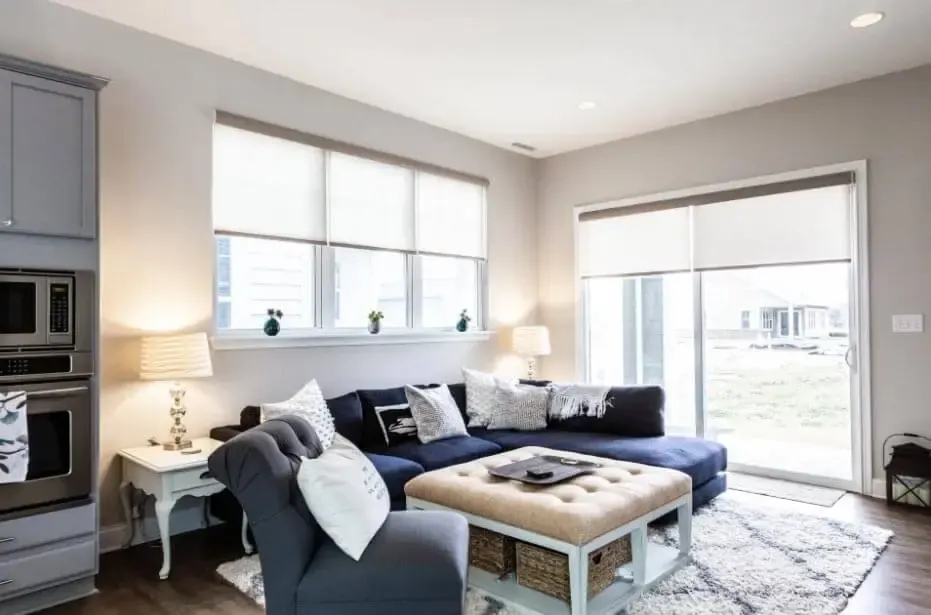 Do You Need Blackout, or Will Room Darkening Get the Job Done
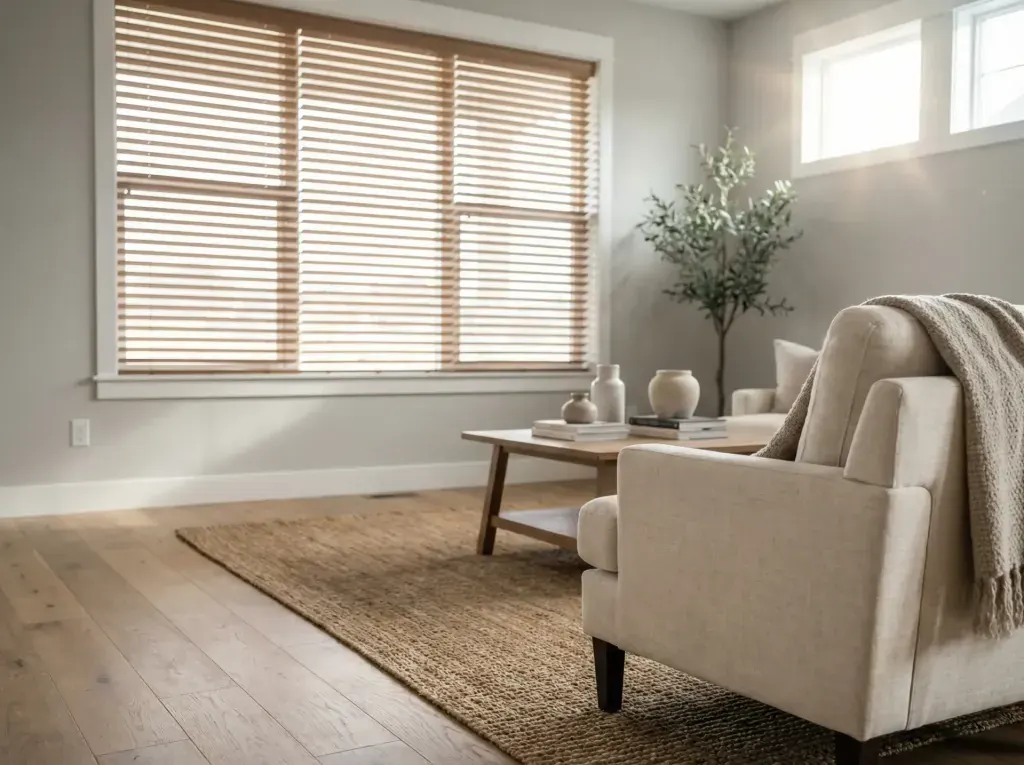 Inside Mount vs Outside Mount: Choosing the Right Fit for Your Sheridan Windows
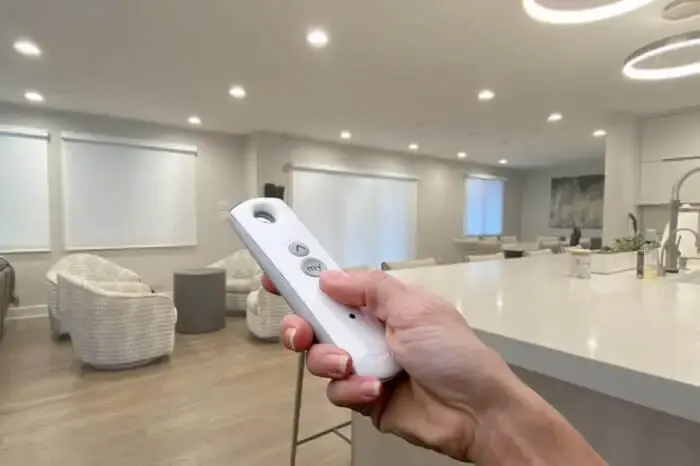 Battery or Hardwired: Powering Smart Shades in Sheridan